The real difference is not how they look
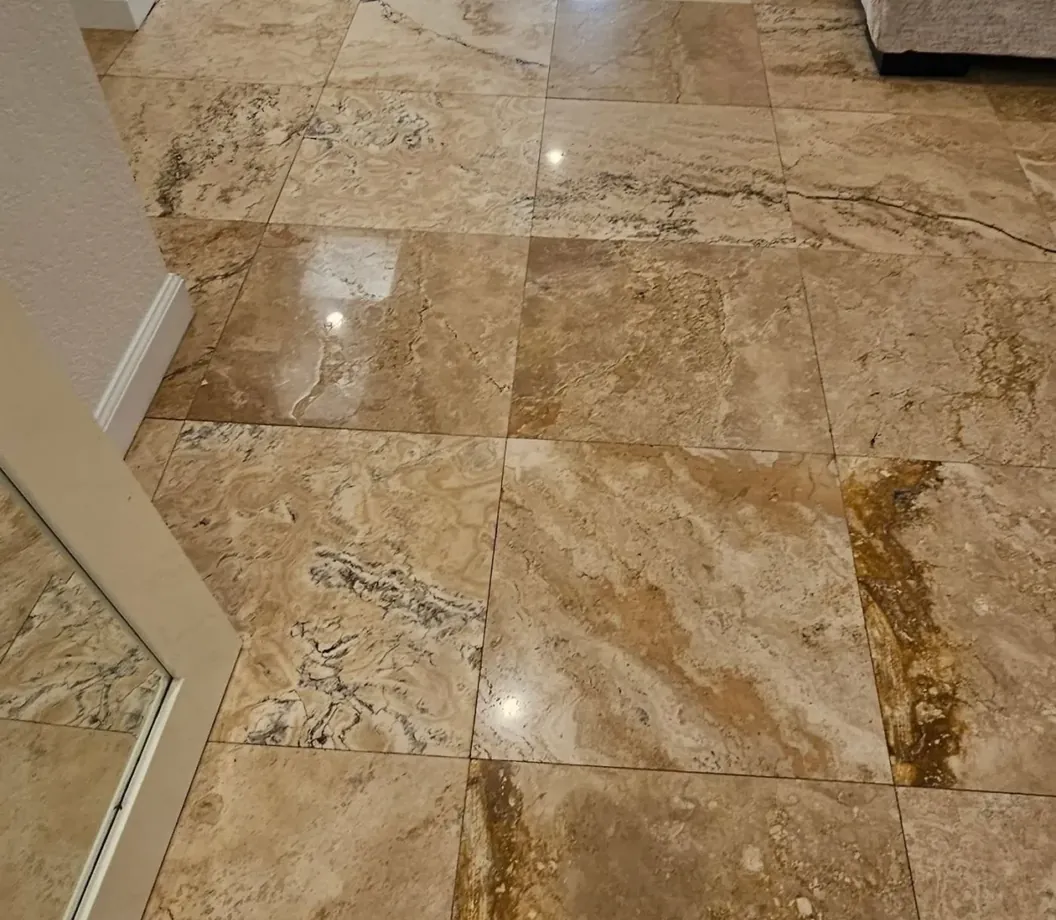
Porcelain and ceramic tile are fired clay. The surface is effectively glass, so it is hard, it does not absorb, and acid does nothing to it. Natural stone is quarried rock, and most of the stone used in Valley homes, travertine and marble especially, is calcite, which reacts to acid.
That single difference drives nearly everything else. It is why stone can be damaged by a cleaner that tile shrugs off, and why stone can be restored in a way tile cannot.
What each one asks of you
Tile asks you to look after the grout. The tile itself is close to indestructible in a domestic setting, but the grout between it is porous and it is where all the trouble lives. Nearly every tile floor we are called about has sound tile and tired grout.
Stone asks you to be careful what you put on it, and gives you something back in return. Use an acidic cleaner and you will etch it. But a stone floor can be honed and polished, which means a scratched, dull or etched stone floor can be taken back to a good finish. A worn porcelain tile cannot: the surface is the surface.
So the trade is roughly this. Tile is more forgiving day to day and has a ceiling on what can be recovered. Stone is less forgiving day to day and has a much higher ceiling.
Room by room
Kitchens see acid: citrus, vinegar, wine, tomato. On calcite stone those leave etch marks. That does not rule stone out, but it does mean a honed finish hides small etching better than a polished one, and spills need wiping rather than leaving.
Bathrooms and showers see hard water, and Valley water is hard. On tile that is a cleaning problem. On stone it is a cleaning problem with a trap attached, because the products sold to remove scale are usually acidic and will etch the stone while they work.
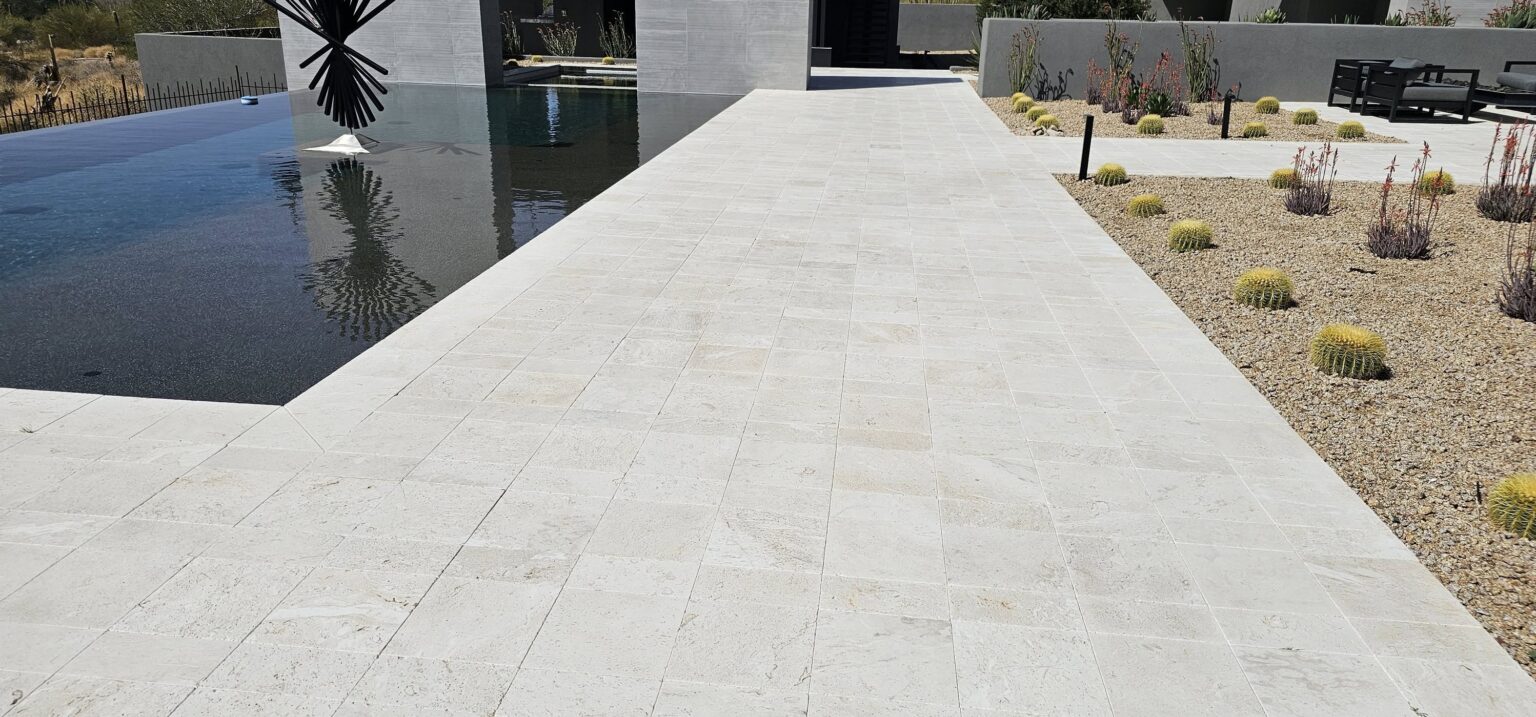
Entryways and patios see grit and sun. Both materials cope. Outdoors, travertine stays noticeably cooler underfoot than most tile, which is why so much of it ends up around Valley pools.
Open-plan living areas are where one material usually runs through the whole floor. Whichever you choose, choose it for the hardest room it has to survive rather than the easiest.
If the floor is already down
Then the useful question is not which is better, it is what you have and how to look after it. If you are not sure which you have, a professional can tell you in a moment, and knowing matters: the single most common cause of damaged stone we see is a general-purpose cleaner used in good faith on a floor nobody realized was calcite.
Ultimate Floor Care cleans tile and grout at $0.35 per square foot and natural stone at $0.45, with polishing at $1.25, across Phoenix, Peoria, and the West Valley. Estimates are free.